Leave Your Message

Why Choose a Concrete Mixer for Your Construction Project?

Choosing the right equipment can shape the quality, speed, and cost of a construction project. A Concrete Mixer offers controlled blending for cement, aggregate, water, and approved additives. This control matters when crews need consistent batches across foundations, slabs, columns, or repair work. A reliable mixture reduces weak spots, uneven curing, and avoidable material waste.

On active sites, practical details often decide whether equipment performs well. A drum mixer can keep concrete moving while workers prepare forms and reinforcement. Larger models support demanding pours, while compact units suit renovation areas, narrow access routes, and smaller teams. Operators should check drum capacity, mixing speed, power requirements, cleaning access, and transport conditions before purchase. These details are not glamorous.

They matter.

Experienced contractors also understand that a mixer does not replace good planning. Accurate measurements, clean aggregates, suitable water content, and trained operation remain essential. Safety procedures, routine inspections, and manufacturer guidance help protect workers and extend machine life. Industry experience suggests that maintenance records can reveal more than a sales brochure. They show how equipment performs after dust, vibration, and repeated loading.

A Concrete Mixer is not a miracle machine. An oversized model may waste fuel and space, while a small unit may slow a critical pour. I have seen equipment selected for price alone, only to create delays later. The better decision considers workload, site conditions, crew skills, service support, and long-term reliability. Some projects still need specialized batching systems. Honest evaluation is better than confident guessing.

Why Choose a Concrete Mixer for Your Construction Project?

Concrete Mixer Fundamentals: 8–12 m³ Capacity for Standard Truck Loads

Why Choose a Concrete Mixer for Your Construction Project?

Concrete mixer fundamentals begin with load size. An 8–12 m³ mixer suits many standard ready-mix truck loads. This range supports slabs, footings, columns, and mid-sized foundation pours without constant refilling. The Global Cement and Concrete Association reports that roughly 14 billion cubic metres of concrete are produced annually worldwide. That scale makes efficient batching and delivery essential, even on smaller sites.

Capacity alone does not decide productivity. Site access, discharge distance, placement speed, and crew readiness matter equally. A full 12 m³ load can create pressure when pumps, forms, or workers are not prepared. A smaller load may reduce waste and traffic, but it can increase delivery frequency. Imperfect planning happens. Measure it honestly.

ASTM C94/C94M addresses ready-mixed concrete delivery and requires agreed control over time, revolutions, and performance. ACI 304R also stresses coordinated transporting, placing, and consolidation. Check the slump. Confirm the mix design before loading. Keep washout areas controlled and document batch times. Axle limits and local transport rules may reduce the practical payload below 8–12 m³. For repeated pours, matching mixer capacity with the pour sequence often improves consistency more than choosing the largest available drum.

Mixing Performance: 30–60 m³/h Output for Continuous Construction Work

Why Choose a Concrete Mixer for Your Construction Project?

Mixing Performance: 30–60 m³/h Output for Continuous Construction Work

A concrete mixer delivering 30–60 m³/h can support steady work on slabs, foundations, roads, and commercial floors. This range helps crews maintain a regular concrete supply without frequent pauses. In practical site use, output depends on aggregate size, moisture, batch loading, and operator timing. A mixer may reach its rated capacity, but real production is often lower. That difference matters when scheduling pumps, formwork, and labor. Consistent mixing also improves cement distribution, reducing dry pockets and uneven concrete texture.

Tips: Check the actual output under your site conditions. Keep aggregate moisture records. Train operators to load materials in a stable sequence. Inspect paddles, drums, belts, and discharge areas every day. Small delays become expensive during continuous pours.

Experience shows that speed alone does not guarantee quality. I have seen projects lose time because the mixer ran quickly but received poorly measured materials. Calibrated weighing systems and regular slump checks provide better control. The right mixer should match the required volume, available space, power supply, and maintenance skills. Noise, cleaning access, and spare-part availability also deserve attention. These details seem minor until production stops. A reliable setup balances output with repeatable mixing performance, not impressive figures alone.

Concrete Quality Control: ASTM C94 Uniformity Tests and Delivery Standards

Why Choose a Concrete Mixer for Your Construction Project?

Concrete quality depends on more than cement, water, and aggregate. ASTM C94/C94M requires uniformity checks from different portions of the same batch. For slump, the permitted difference is generally 1 inch when average slump is 4 inches or less. It rises to 1.5 inches above that level. Air-content results should typically remain within 1 percentage point. These limits make a concrete mixer valuable because controlled drum mixing can reduce visible segregation before testing begins.

Delivery timing matters just as much. ASTM C94 commonly requires discharge within 90 minutes after mixing water enters the batch, or within 300 drum revolutions, unless project documents allow another limit.

A delayed truck can arrive with a stiff surface, even when the mix design was correct. Field crews should record batch time, arrival time, slump, air content, and concrete temperature. ASTM C172 sampling procedures also require representative samples, not a single scoop from the easiest location.

Small mistakes still happen. A hurried sample can mislead.

ACI 318-19 uses strength acceptance criteria based on consecutive tests, reinforcing the need for consistent sampling and curing. In practical work, I have seen weather, traffic, and waiting time affect results more than expected. That is why mixer selection should support steady agitation, clear batch records, and quick testing at discharge.

No mixer fixes poor inspection.

Project Economics: Compare Labor, Fuel, and Batch-Plant Operating Costs

Why Choose a Concrete Mixer for Your Construction Project?

Project Economics: Compare Labor, Fuel, and Batch-Plant Operating Costs

Choosing a concrete mixer is an economic decision, not merely an equipment decision. On a mid-sized site, a mixer can reduce waiting time between batches and placements. That matters when crews stand idle beside forms, pumps, or reinforcing steel. Labor savings appear quietly. One operator may manage loading, mixing, and discharge, while fewer workers handle repeated wheelbarrow trips. Actual staffing depends on output, safety procedures, and site layout. Do not assume the smallest crew is always the cheapest.

Fuel creates a visible operating cost. Track liters per hour, working hours, and local fuel prices during real site conditions. An efficient mixer can still lose its advantage if it runs empty, idles often, or travels too far for materials. Batch plants may provide high volume and consistent mixing, but their economics include delivery charges, setup costs, scheduling limits, and possible waiting fees. Remote projects often face longer transport distances, which can increase fuel use and reduce concrete freshness.

Use a simple comparison sheet before purchasing or renting equipment. Record labor hours, fuel consumption, maintenance, material loading time, and expected daily output. Then compare those figures with batch-plant quotes and delivery schedules. For example, a mixer may appear cheaper per batch, yet produce more rework if operators measure water poorly. That weakness is real. Training, calibration, and routine checks protect quality and reduce waste. My own cost estimates would remain provisional until several production days reveal actual delays, fuel use, and crew performance.

Mixer Selection: Match Capacity, Mobility, Slump, and Site Conditions

Why Choose a Concrete Mixer for Your Construction Project?

Mixer Selection: Match Capacity, Mobility, Slump, and Site Conditions

Choosing a concrete mixer starts with the pour, not the machine. Estimate the required batch volume, placement speed, and available labor. A mixer that is too small may create cold joints between batches. An oversized unit can waste material and complicate cleaning. Measure twice. Conditions change.

Capacity must match the crew’s rhythm. For small slabs, repairs, and fence foundations, a compact mixer often provides better control. Larger foundations need higher output and consistent charging intervals. Calculate usable capacity, not the drum’s advertised volume. Overfilling reduces mixing quality and strains the drive system.

Mobility matters when access is narrow or the ground is uneven. Wheels, towing arrangements, and a stable frame affect daily productivity. On soft soil, place the mixer on firm boards or a prepared pad. Slump also guides selection. Stiff mixes may require stronger mixing action, while wetter mixes can separate if handled carelessly. Test slump near the placement area, because transport and weather can alter workability. I once underestimated afternoon heat and adjusted water too late. The mix became easier to place, but its quality became less predictable. That mistake costs time. Keep aggregate size, cement ratio, moisture, and mixing duration consistent. Record batch results, even on smaller jobs. A simple log can reveal whether capacity, mobility, or site conditions are causing delays.

Why Choose a Concrete Mixer for Your Construction Project? - Mixer Selection: Match Capacity, Mobility, Slump, and Site Conditions
Mixer Class Nominal Drum Capacity Typical Usable Batch Output Recommended Daily Volume Mobility and Transport Suitable Slump Range Best-Fit Site Conditions Typical Applications Selection Consideration
Compact Portable Mixer 60–120 L 40–80 L per batch Up to 5 m³ Manual movement or small wheels; can pass through narrow gates and interior doorways 60–120 mm Residential renovations, small repair areas, limited-access locations, and sites without lifting equipment Post bases, paths, small slabs, fence foundations, and patching work Choose this class when access and portability are more important than production speed.
Small Towable Mixer 150–250 L 100–180 L per batch 5–15 m³ Trailer-mounted or wheel-mounted; suitable for towing between nearby work areas 50–150 mm Small building sites, landscaping projects, rural work areas, and locations with uneven but passable ground Footings, driveways, garden walls, small retaining walls, and floor repairs Provides a practical balance between moderate output, lower transport cost, and flexible positioning.
Medium Site Mixer 300–500 L 200–350 L per batch 15–35 m³ Usually moved by a tow vehicle, forklift, or site handling equipment; requires a prepared access route 50–180 mm General building sites with stable ground, vehicle access, and sufficient space for material loading Residential foundations, slabs, columns, drainage channels, and low-rise structural work Suitable when consistent batching is required but a full concrete delivery truck is impractical.
Large Stationary Mixer 750–1,500 L 500–1,000 L per batch 35–100 m³ Installed in a fixed position; normally loaded with a loader, skip, or conveyor system 40–200 mm Large, organized sites with firm foundations, dedicated material storage, electrical supply, and controlled traffic routes Commercial floors, warehouse foundations, precast components, and repeated structural pours Offers higher output, but setup space, power requirements, and material-handling equipment must be planned in advance.
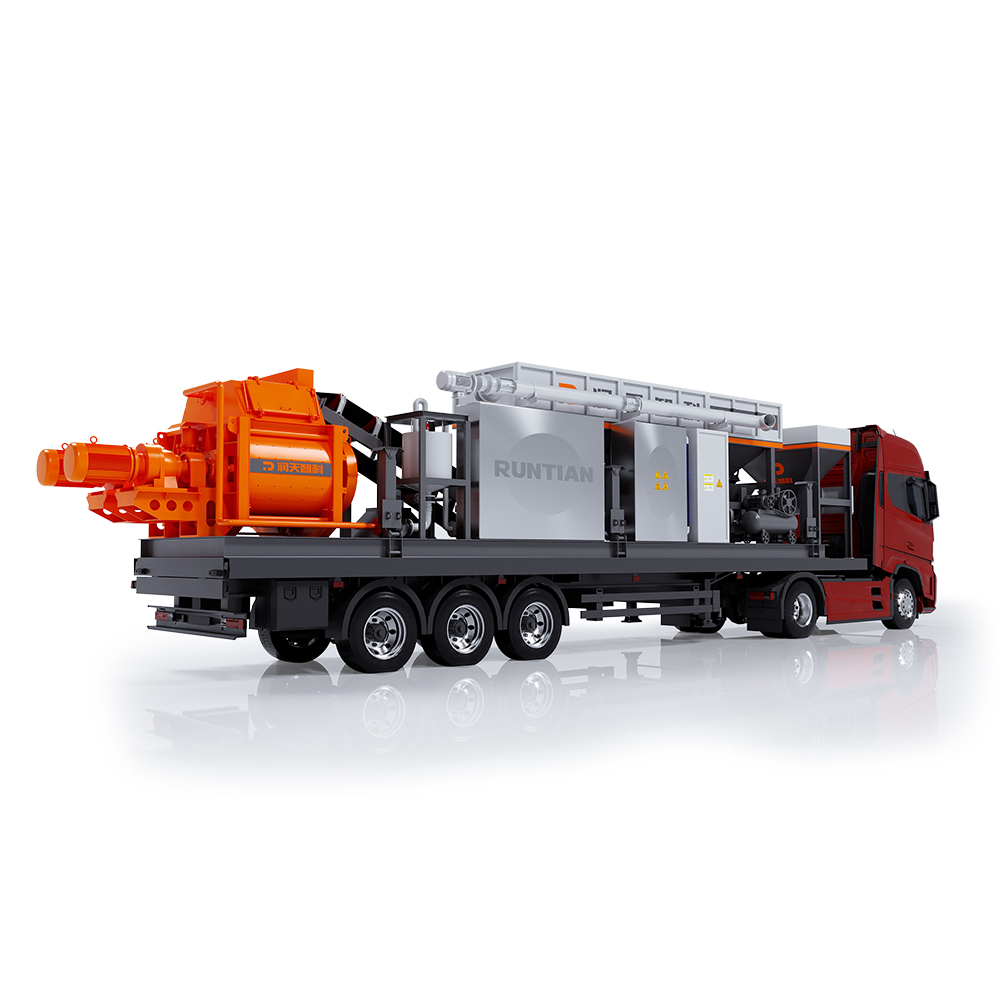
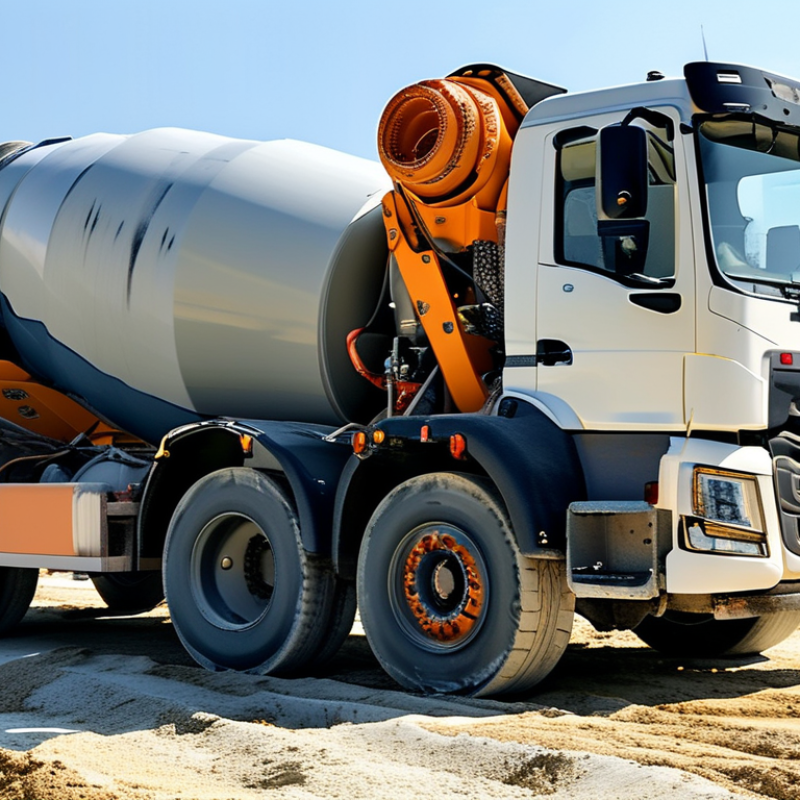
Truck-Mounted Mixer 6–12 m³ drum capacity Typically 4–10 m³ delivered per load 40–150 m³ or more Road-legal vehicle; highly mobile but requires adequate road width, turning space, bridge capacity, and load-bearing ground 50–220 mm Projects with reliable road access, continuous placement, and sufficient space for vehicle positioning and discharge Large slabs, multi-storey foundations, bridge work, highways, and major commercial construction Best for high-volume pours; delivery timing and allowable travel time must be coordinated with placement and finishing operations.

Practical selection rule: Select a mixer whose usable batch output supports the required pour rate without exceeding the crew’s placing and finishing capacity. Actual output varies with material loading time, mixing duration, concrete recipe, moisture content, operator skill, access conditions, and required quality-control checks.